Short answer: Solar pumps cost more upfront but have near-zero running costs, so they usually pay back within 2–4 years against diesel and 4–8 years against grid power. AC pumps win where reliable, cheap grid power exists or where water is needed around the clock without storage.
The core difference
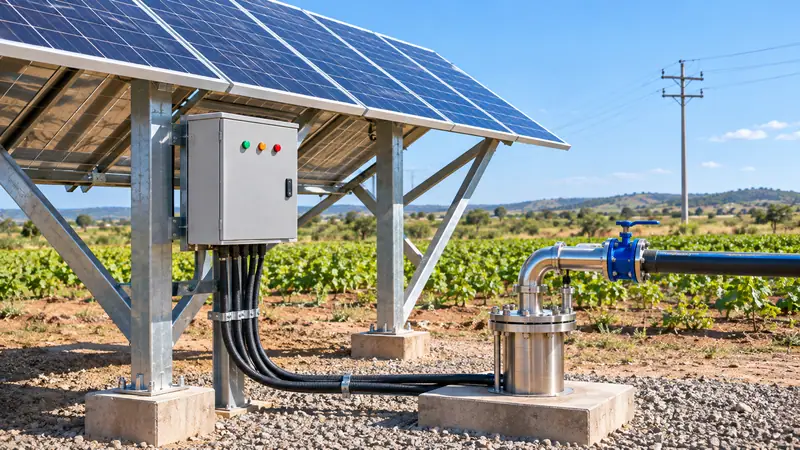
An AC pump runs from the grid or a generator at a fixed speed. A solar pump runs from photovoltaic panels through a controller that varies motor speed with the sunlight available. That single difference changes the economics, the system design and the way you store water.
Upfront cost versus running cost
| Factor | Solar DC pump | Grid AC pump | Diesel-driven pump |
|---|---|---|---|
| Equipment cost | Highest (pump + controller + panels) | Lowest | Medium |
| Energy cost | Zero | Tariff dependent | High and volatile |
| Maintenance | Very low, panel cleaning | Low | High: oil, filters, fuel logistics |
| Water delivery | Daylight hours, follows sun | On demand, 24 h | On demand while fuelled |
A simple payback calculation
Estimate the annual energy a conventional pump would use (motor kW × hours per day × 365) and multiply by the cost per kWh or per litre of diesel. Divide the extra investment for solar by that annual saving. A 1.1 kW pump running 6 hours a day on diesel consumes roughly 1,500–2,000 litres of fuel per year; at typical rural fuel prices the solar premium is often recovered in two to three seasons.
Daily output, not peak flow
Compare pumps on cubic metres per day, not litres per minute. A solar pump with a modest peak flow can match an AC pump's daily volume because it runs every sunny hour. Use local peak sun hours (typically 4.5–6.5 in the tropics) to convert: daily volume ≈ average flow × effective sun hours.
When solar is the right choice
- No grid connection, or an unreliable or expensive one.
- Diesel delivery is costly or insecure.
- Water can be stored in tanks, ponds or the soil (irrigation).
- Demand peaks in sunny seasons — which is exactly when irrigation is needed.
When an AC pump is better
- Cheap, stable grid power is already at the well.
- Water is needed at night or on demand without storage.
- Very large flows above about 50 m³/h, where the PV array becomes very large.
Hybrid systems
AC/DC hybrid controllers accept both PV and grid or generator input and switch automatically. They are a strong option for farms that want solar savings by day with a backup for cloudy weeks. Our solar pump range includes 4LSD and 4QSS models compatible with hybrid controllers.
How to choose a solar pump model
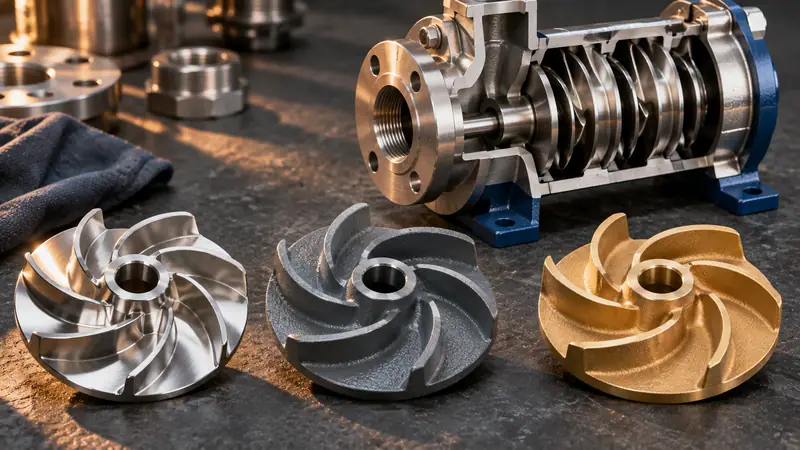
Helical-rotor (screw) solar pumps such as our 3LQG series are efficient at low flow and high head, ideal for deep livestock wells. Multistage centrifugal solar pumps such as the 4LSD series move larger volumes at moderate head for irrigation. Tell us your daily volume, total head and location, and we will size the panels, controller and pump as a matched kit.
Frequently asked questions
Can a solar pump work on cloudy days?
Yes, at reduced output. An MPPT controller keeps the pump running at lower speed in diffuse light; on a heavily overcast day expect 20–40% of a sunny-day volume. Size storage for one to three days of demand in cloudy climates.
Do I need batteries for a solar water pump?
Usually not. Storing water in an elevated tank is cheaper and longer-lasting than storing electricity in batteries. Batteries or an AC/DC hybrid controller are only worth it if you need water at night.
How many solar panels does a solar pump need?
As a rule of thumb, install 1.3–1.5 times the motor power in panel watts. A 750 W DC pump typically runs from 1,000–1,100 W of panels arranged to suit the controller voltage window.